
Why Rushed Conditioner Ruins Fine Hair

The 3-Minute Rule: Why Rushed Conditioner Ruins Fine Hair
Most fine-hair routines skip conditioner or rinse it out in seconds, convinced that less product means less grease. It's the opposite problem: hair isn't overloaded, it's under-absorbed. Here's the timing that actually fixes it.
Conditioner has a reputation problem with fine hair. After one flat, oily wash day, it's common to swear the product off entirely — or to slap it on and rinse it out almost as fast as it went in. The reasoning feels sound: less conditioner, less weight, less grease. In practice, it works against you. How conditioner is applied matters as much as which one you choose, and when it's rinsed before it can do its job, that's usually the real reason hair ends up limp, greasy, or oddly coated instead of soft.
Why fine hair keeps skipping the step it needs most
Fine strands have a smaller diameter than thick or coarse hair, so buildup and heaviness show up faster and more visibly. One bad experience with greasy roots is often enough to make someone abandon conditioner altogether, or blast through the step as quickly as possible to get it over with.
The problem is what that shortcut leaves behind. Shampoo lifts the hair's outer cuticle to clear away oil and debris — conditioner's entire job is to smooth that cuticle back into place and seal it shut. Skip the step, or rush it, and the cuticle stays slightly raised. Instead of protecting the hair, that leaves it more exposed to oiliness, frizz, and breakage than if conditioner had never entered the routine's problem list at all.
Conditioner needs time, not just contact
Think of it the way you'd think about lotion on your hands. Rub lotion in and rinse it off a second later, and it never gets absorbed — it just sits on the skin's surface, and none of the softening benefit lands. Hair behaves the same way.
When conditioner is rinsed out too quickly, it doesn't have a chance to bind to the hair shaft. Instead, it coats the outer cuticle unevenly — which is exactly what produces that contradictory feeling of hair being greasy on the outside while still rough and dry underneath.
| Signal | Rinsed Too Fast | Given 1–3 Minutes |
|---|---|---|
| Feel | Slick outside, dry underneath | Soft all the way through |
| Cuticle | Coated unevenly, still raised | Smoothed and sealed |
| Root area | Can feel heavy or greasy fast | Lighter, more separation |
| Result over time | More frizz, more breakage | Improved elasticity, shine |
It's not the formula — it's the absorption window
If the conditioner is genuinely formulated for fine or oily-root hair, "greasy" almost never means the product is too heavy. It means the conditioner hasn't had the chance to actually hydrate and seal the cuticle — it's still sitting on top of the strand instead of working inside it.
When conditioner never gets past the surface, it fails at three things at once: it doesn't seal moisture into the shaft, it doesn't smooth the cuticle evenly, and it doesn't improve the hair's elasticity or softness. What's left is a slippery, coated feeling with none of the underlying benefit.
How to condition fine hair the right way
Correct conditioning isn't about using more product — it's about using the right amount, in the right place, for the right amount of time.
That short pause is what lets conditioner actually do its job: softening, smoothing, and protecting the strand from the inside instead of sitting on top of it. Treat it as a small pause in the shower rather than a step to rush past.
Quick facts about conditioning fine hair
- Skipping conditioner isn't a shortcut. It leaves the cuticle raised, which invites more frizz and breakage, not less.
- Greasy roots usually aren't a formula problem. They're an application problem — the product is landing where it shouldn't, or not absorbing where it should.
- Shampoo and conditioner have different jobs. Shampoo cleans the scalp; conditioner protects the hair shaft.
- 1–3 minutes is the absorption window. Less than that, and conditioner mostly sits on the surface.
- Fine hair needs less product, not less time. The wait matters regardless of how light the formula is.
Choosing a conditioner your hair will actually feel
Shampoo is for your scalp. Conditioner is for your hair. The right one depends on how your strands feel when you rub them between your fingers or run a brush through them.

Conditioner for Fine Hair
Lightweight hydrators — honey, sweet almond oil, tamanu oil, jojoba oil — for softness and shine without heaviness.
Learn more →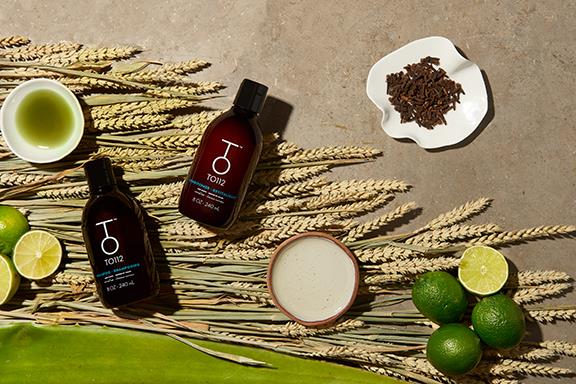
Conditioner for Normal Hair
pH-balanced hydration with tamanu oil, jojoba oil, and amino acids for everyday softness and shine.
Learn more →
Conditioner for Dry Hair
Rich moisturizers — tamanu oil, camellia extract, shea butter — for deeper hydration and manageability.
Learn more →Still not sure? Take the quiz
If you're not sure which one matches how your hair actually behaves, the TO112 Hair Quiz asks a few quick questions and matches you to the right routine — no guessing at the shelf required.
Take the Quiz →Common questions, answered directly
Does fine hair need less conditioner?
Not necessarily less — the right amount, applied correctly. Fine hair shows buildup faster than thick hair, but skipping or rushing conditioner leaves the cuticle raised, which causes more oiliness, frizz, and breakage than a light, properly timed application would.
How long should conditioner sit on fine hair?
At least 1 to 3 minutes. That window gives the conditioner time to bind to the hair shaft and smooth the cuticle, instead of sitting on the surface where it can feel greasy without adding softness.
Why does my hair feel greasy after conditioning?
Usually because the conditioner didn't have time to absorb. If it's rinsed out within seconds, it coats the outer cuticle unevenly, which can feel slick or heavy on the outside while the hair underneath stays dry.
Should conditioner touch the scalp?
No. Conditioner is formulated for the hair shaft, not the scalp. Apply it from mid-length to ends and keep it away from the roots to avoid clogging follicles or weighing down fine hair at the root.
What's the right way to condition fine hair?
Apply a light layer to clean, wet mid-lengths and ends, avoiding the scalp. Let it sit for 1 to 3 minutes, work it through with fingers or a wide-tooth comb, then rinse thoroughly so no residue is left behind.

