
The Right Way to Air Dry Hair

The Right Way to Air Dry Hair (And Why Most People Are Doing It Wrong)
By Fiona Pincente · 7 min read
Skipping the blow dryer is only half the equation. The other half — the part most people miss — is everything that happens in the hour before your hair is fully dry. Here's how to get it right.
Step One
Should you apply product before or after you air dry?
Before. Always before. This is the most common mistake in an air-dry routine, and it's one that compounds quietly over time. When hair is left bare and wet, water penetrates the cortex freely — causing the hygral fatigue and osmotic swelling we explored in our first piece on air drying. A leave-in cream or styling product applied to damp hair creates a barrier that controls how much moisture moves in and out, slowing the damage cycle before it begins.
The texture of your product matters too. Oils applied to soaking-wet hair tend to sit on top of the water rather than bonding to the strand — with limited protective effect until most of the water has evaporated. The sweet spot is towel-blotted but still damp hair: wet enough for the product to distribute evenly, dry enough for it to actually absorb.
The correct order: shampoo → condition → blot gently with a towel → apply leave-in cream while hair is still damp → comb through → air dry. Products applied after drying are finishing products, not protective ones.
The Humidity Factor
Does humidity affect how your hair air dries — and what can you do about it?
Significantly. Humidity is moisture in the air, and hair — being hygroscopic — is constantly exchanging moisture with its environment. In humid conditions, hair that has finished drying can reabsorb atmospheric moisture through its cuticle, causing the cortex to swell again. This is what creates frizz: the outer cuticle scales lift unevenly as moisture enters, disrupting the smooth surface.
The fix isn't to style faster or use more product mid-dry. It's to seal the cuticle after styling is complete, before humidity has the chance to re-enter. This is where a finishing spray formulated specifically to block atmospheric moisture comes in — applied as the very last step, once hair is fully dry.
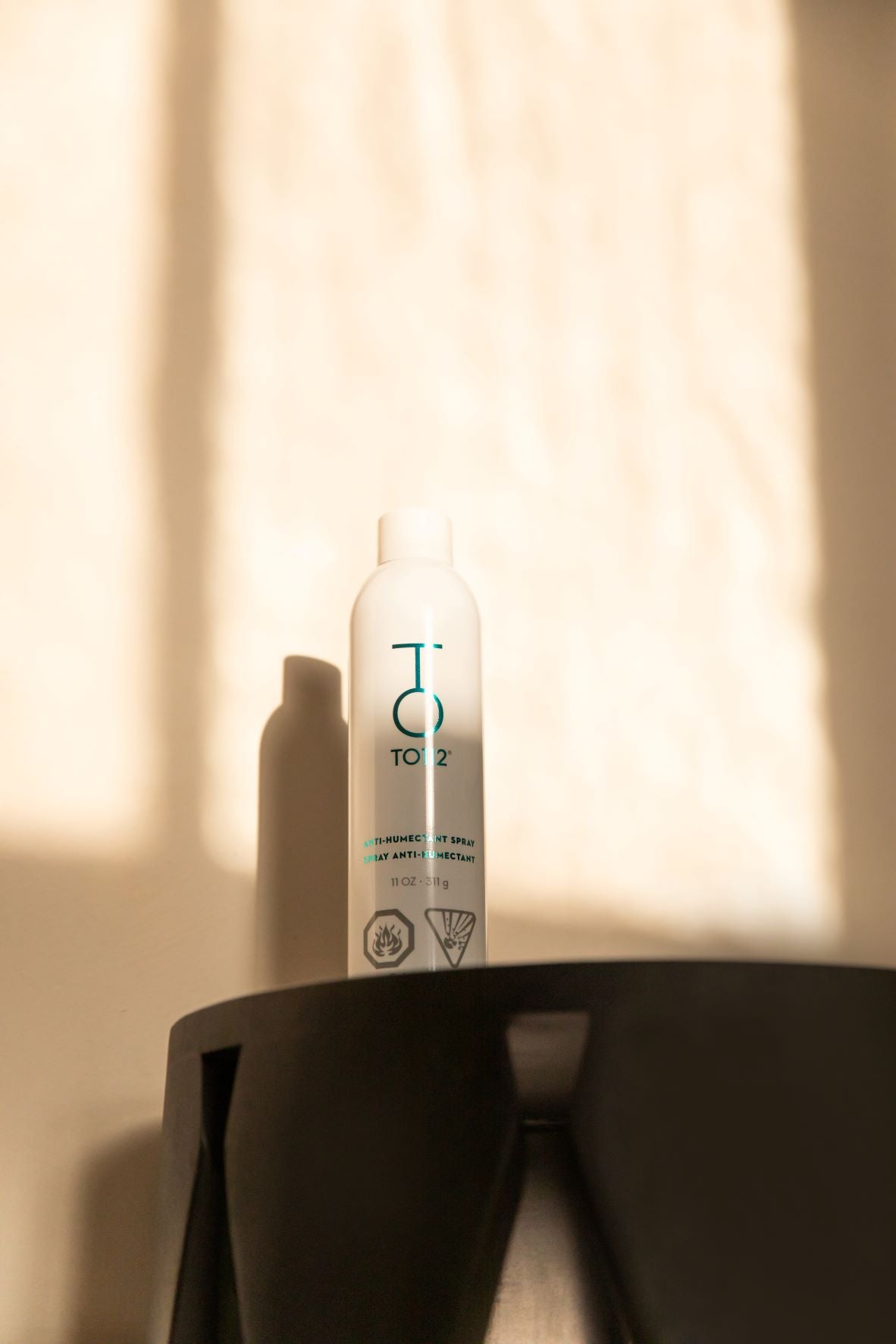
Anti-Humectant Spray
An invisible, ultra-lightweight finishing mist that creates a sealant around the hair cuticle to lock out moisture in humid environments. Safe for colour and keratin-treated hair. Apply 30cm from the hair surface as your absolute last step.
Pro tip from the TO112 team: flip your hair over and mist the underside first. The area closest to your neck and shoulders traps rising body heat and moisture — making it the most frizz-prone section and the most commonly missed.
Texture Troubleshooting
Why does air-dried hair sometimes feel rough, frizzy, or straw-like even without heat damage?
The two most likely culprits are a disrupted moisture-protein balance and cumulative hygral fatigue — both of which develop gradually and are easy to misread as heat damage.
Hair needs both moisture and protein to maintain its structure. Moisture gives hair flexibility and softness; protein gives it strength and shape. When hair is repeatedly saturated and dried without protection, the cortex swells and contracts over and over, slowly degrading the protein bonds that hold the strand together. The result is hair that feels rough and straw-like — not because it's dry, but because its internal structure has been weakened by too much water movement, not too little.
more porous: how much more moisture-absorbent bleached hair is vs. virgin hair
typical air-dry time for thick hair — a long window of unprotected wet exposure
the ideal scalp pH; alkaline products disrupt this and increase cuticle porosity
If your hair consistently feels rough after air drying despite using leave-in products, a protein treatment is likely the missing piece. Look for formulas containing hydrolysed keratin, silk proteins, or panthenol — these work by temporarily filling gaps in the damaged cuticle to restore smoothness and reduce moisture permeability.
Technique
What's the best way to dry hair at the roots vs. the ends?
Roots and ends have fundamentally different needs during air drying, and treating them the same is one of the most common technique mistakes.
The Roots
Prioritise volume & lift
Roots dry fastest but are most prone to going flat as wet hair weighs them down. Clip roots loosely at the crown while damp to encourage lift, or flip hair forward to let roots set with natural volume before the weight of the mid-lengths pulls them down.
The Mid-lengths
Apply product evenly here
The mid-shaft is where most mechanical stress accumulates during drying. This is where your leave-in cream should be concentrated — combed through evenly to ensure consistent moisture buffering across the widest section of the strand.
The Ends
The most vulnerable zone
Ends are the oldest part of the hair and the most porous. They dry last, absorb the most product, and break most easily when manipulated while wet. Leave ends alone once product is applied — no touching, scrunching, or separating until fully dry.
Common Question
Is microfibre towel drying considered air drying?
Yes — and it's actually the recommended starting point for a healthy air-dry routine. Microfibre towels remove a significant amount of water from the hair without the friction of a standard cotton towel, which is important because wet hair is more elastic and more prone to mechanical breakage from rough drying.
"The towel you use matters almost as much as the products you apply. Cotton roughens the cuticle while it dries. Microfibre absorbs without friction — that distinction compounds over hundreds of wash days."
— Professional hairstylist perspective
Microfibre drying reduces overall air-dry time by removing surface water before the slower evaporative drying begins — which means less time in the wet window where hygral fatigue risk is highest. Blot and gently squeeze in a downward motion; never rub or twist. Wrapping hair in a microfibre turban for 10–15 minutes before applying product is an effective first step.
The Wet Window
How long is too long to leave hair wet?
The general threshold most trichologists reference is around 15–20 minutes of unprotected wet time before osmotic stress begins to accumulate meaningfully. Beyond that, repeated exposure starts to degrade the protein bonds inside the cortex — particularly in hair that is already porous, chemically treated, or naturally fine.
This doesn't mean your hair must be dry within 20 minutes. It means the protective product should be applied within that window. Once a leave-in cream or barrier spray is coating the strand, the rate of moisture ingress slows significantly — extending the safe drying window considerably. The clock starts when you step out of the shower, not when you begin styling.
In practice: blot with microfibre immediately after washing, apply your leave-in cream within 10–15 minutes, then let hair take as long as it needs to dry fully. The danger isn't the drying time — it's the unprotected time.
Colour & Chemical Treatments
Can air drying worsen colour-treated or chemically processed hair?
Yes — and more so than on virgin hair. Chemical processes (colouring, bleaching, perming, relaxing, keratin treatments) alter the structure of the hair cuticle, making it more open and porous. Porous hair absorbs water faster and loses moisture faster — meaning the osmotic swelling cycle happens more intensely and more rapidly with each wash.
Colour-treated hair also has weakened disulfide bonds — the cross-links that give hair its tensile strength. Repeated hygral fatigue accelerates the breakdown of these bonds, leading to faster colour fade (as water flushes pigment molecules out through the open cuticle) and increased brittleness over time.
For this reader in particular, the leave-in step is non-negotiable, not optional. A cream that contains dimethicone or a silicone-adjacent polymer forms the most effective barrier against rapid moisture ingress, while botanical oils like tamanu and pomegranate help restore surface integrity between washes. A humidity-blocking finishing spray applied after drying is equally important — especially in climates where atmospheric moisture is a daily factor.
The Routine
Two products. The complete air-dry system.
The right air-dry routine has two distinct phases: protect while wet, seal when dry. The Ultimate Hair Cream handles the first — applied to damp hair to buffer osmotic swelling, add moisture, and smooth the cuticle as it dries. The Anti-Humectant Spray handles the second — applied to fully dry hair to lock the cuticle shut against atmospheric moisture. Together they address every stage of the air-dry process that most routines leave unprotected.
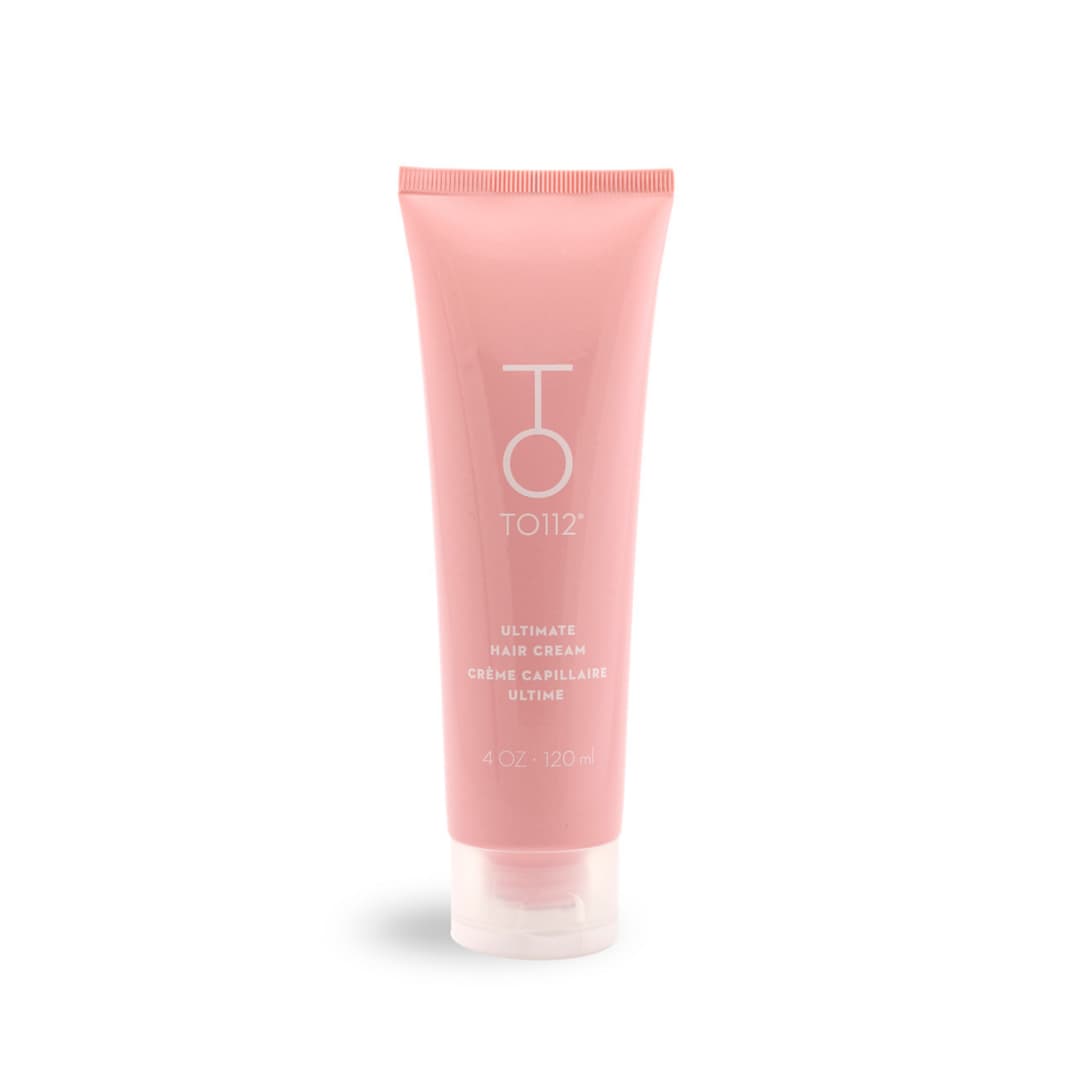
Ultimate Hair Cream
Apply to towel-dried hair before air drying. Tamanu oil, pomegranate oil, and camellia extract buffer moisture ingress and smooth the cuticle — protecting the cortex through every stage of the drying process.
Frequently Asked
Common questions, answered directly
Should you apply product before or after you air dry?
Before. Always before. A leave-in cream or styling product applied to damp hair creates a barrier that controls how much moisture moves in and out, slowing the damage cycle before it begins. The sweet spot is towel-blotted but still damp hair — wet enough for the product to distribute evenly, dry enough for it to actually absorb.
Why does air-dried hair sometimes feel rough, frizzy, or straw-like even without heat damage?
The two most likely culprits are a disrupted moisture-protein balance and cumulative hygral fatigue. When hair is repeatedly saturated and dried without protection, the cortex swells and contracts over and over, slowly degrading the protein bonds that hold the strand together — leaving hair rough and straw-like from too much water movement, not too little.
Is microfibre towel drying considered air drying?
Yes — and it's actually the recommended starting point for a healthy air-dry routine. Microfibre towels remove a significant amount of water without the friction of a standard cotton towel, which reduces the time hair spends in the wet window where hygral fatigue risk is highest.
How long is too long to leave hair wet?
The general threshold most trichologists reference is around 15–20 minutes of unprotected wet time before osmotic stress begins to accumulate meaningfully. This doesn't mean hair must be fully dry within 20 minutes — it means the protective product should be applied within that window, since once it's coating the strand, moisture ingress slows significantly and the safe drying time extends considerably.
Can air drying worsen colour-treated or chemically processed hair?
Yes — and more so than on virgin hair. Chemical processes make the cuticle more open and porous, so it absorbs and loses water faster, and the osmotic swelling cycle happens more intensely with each wash. Colour-treated hair also has weakened disulfide bonds, and repeated hygral fatigue accelerates their breakdown, leading to faster colour fade and increased brittleness over time.
Medical Disclaimer: This article is for informational and educational purposes only and does not constitute medical advice. Individual hair health varies. For persistent breakage, thinning, or scalp concerns, consult a licensed trichologist or dermatologist. TO112 products are cosmetic formulations and are not intended to diagnose, treat, cure, or prevent any medical condition.


