
Is Frizzy Hair a Sign of Damage?

Is Frizzy Hair a Sign of Damage? The Direct Answer
Frizz gets blamed for a lot. Sometimes it's just your hair doing normal chemistry in humid air. Sometimes it's your cuticle telling you something has actually gone wrong. Here's how to tell which one you're looking at.
The one thing frizz always means — and the one thing it doesn't
Every strand of hair is wrapped in a cuticle — a layer of overlapping scales, like shingles on a roof. Keratin is hygroscopic, meaning it pulls moisture directly from humid air. When water reaches the cortex underneath, the strand swells unevenly, the cuticle lifts, and light starts scattering instead of reflecting. That's frizz. It happens to healthy hair and damaged hair alike.
What frizz always means is that moisture got into the cortex. What it doesn't automatically mean is that your hair is unhealthy. The difference comes down to how easily that moisture got in, and how well the cuticle recovers once it dries. A healthy, tightly-closed cuticle is a slow door. A damaged, already-lifted cuticle is a door that barely closes at all.
Humidity frizz vs. damage frizz
Both look like frizz from across the room. Up close, they behave very differently — and the difference tells you exactly what to do about it.
| Signal | Humidity Frizz (Normal) | Damage Frizz (Warning Sign) |
|---|---|---|
| When it appears | Mainly on humid or rainy days | Persists in almost any weather |
| Texture | Smooth to the touch, just lifted | Rough, dry, or straw-like |
| Shine | Returns once cuticle re-closes | Consistently dull, low light reflection |
| Tangling | Minimal, mostly at the ends | Frequent, starts higher up the strand |
| Underlying cause | Temporary cuticle lift from water vapour | Cuticle stays open — from heat, colour, or friction |
| What fixes it | A leave-in cream and a humidity-sealing spray | Protein treatments, trims, and reduced heat/chemical use |
5 signs your frizz is actually damage
One of these on its own isn't conclusive — frizz always has some overlap with normal hair behaviour. Three or more together is a strong signal that you're dealing with real damage, not just the weather.
-
It shows up even in dry, low-humidity air
Healthy frizz needs moisture in the air to trigger it. If your hair is fuzzy on a dry winter day with no humidity to blame, the cuticle is likely already compromised and letting moisture escape or in unevenly on its own.
-
It feels rough or straw-like, not just puffy
Lifted-but-healthy cuticle still feels relatively smooth. A rough, gritty texture under your fingers usually means the scales aren't lying flat at all — a hallmark of cumulative damage.
-
Shine doesn't come back
A smooth cuticle reflects light in one direction, which reads as shine, and that shine returns once healthy hair finishes drying. Persistent dullness, even after the humidity has passed, points to a cuticle that never fully re-closes.
-
Tangling starts high on the strand, not just at the ends
Some tangling at the oldest, most porous ends is normal. Tangling that starts mid-shaft or near the roots suggests the cuticle is rough and catching along more of the strand's length.
-
You're seeing breakage, not just flyaways
Frizz is a surface phenomenon. Actual strand breakage, split ends, or hair snapping when stretched is a structural issue — evidence that the protein bonds inside the cortex, not just the cuticle, have been compromised.
Why damaged hair frizzes faster and worse
Damage and porosity are closely linked, and porosity is what sets your frizz timeline. Heat styling, colour processing, chemical treatments, and rough mechanical handling all lift the cuticle and often keep it from closing fully. Once that happens, the cuticle stops acting like a slow-closing door and starts acting like one that's permanently ajar — moisture moves in and out far more easily, and the swelling-and-scattering cycle that causes frizz happens faster, more often, and more unevenly.
This is also why damaged hair frizzes in patterns that undamaged hair doesn't: unevenly, in specific sections, and disproportionately at the ends, which are the oldest and most processed part of every strand.
Frizz is your hair absorbing moisture unevenly. Damage is what happens when the cuticle can no longer control how much moisture gets in, or how quickly it leaves. — TO112 Hair Science
Quick facts about frizz and damage
- Frizz is not proof of damage. It's a moisture response that happens in both healthy and unhealthy hair.
- Curl pattern is a multiplier, not a cause. More bends mean more places for cuticle scales to lift — that's structural, not damage.
- Bleached hair is roughly 30% more porous than virgin hair, which is why it frizzes faster and more visibly.
- Damaged cuticle doesn't self-repair. Products can smooth and temporarily fill gaps, but true repair only happens as hair grows out.
- Dullness plus frizz is a stronger signal than frizz alone. Combined symptoms diagnose damage far better than any single sign.
- Ends frizz first because they're oldest. They've been through the most washes, heat, and handling of any point on the strand.
If it's humidity — seal it. If it's damage — treat it.
The fix depends entirely on which type of frizz you're dealing with. Humidity frizz responds well to a leave-in cream applied to damp hair and a humidity-blocking finishing spray applied once hair is fully dry — the same two-step routine used for a healthy air-dry. Damage frizz needs a different approach: protein treatments to temporarily fill gaps in the cuticle, reduced heat and chemical exposure, gentler detangling, and regular trims to remove the most compromised, oldest sections of hair.
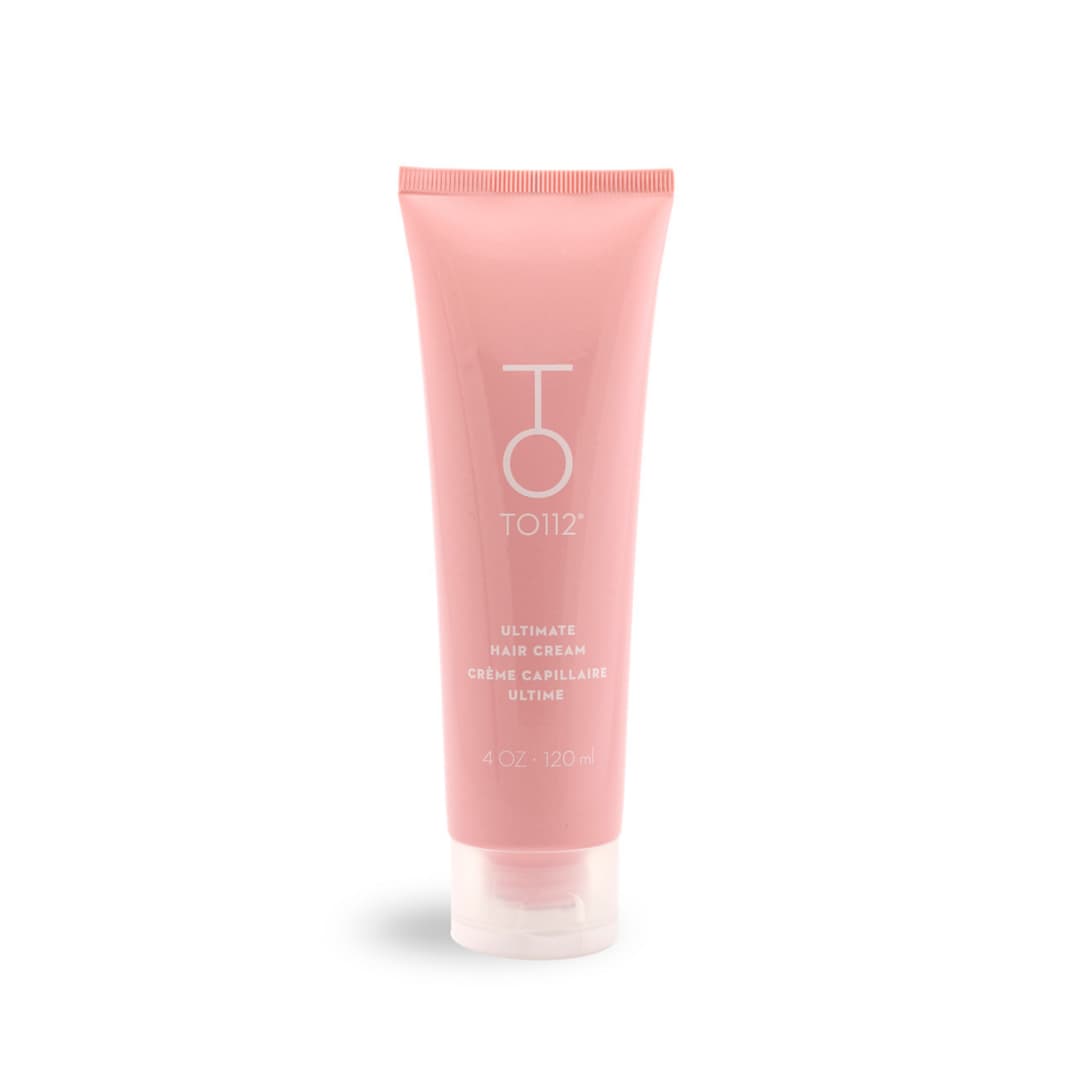
Ultimate Hair Cream
Applied to damp hair, buffers moisture ingress and smooths the cuticle before it has a chance to swell unevenly.
Learn more →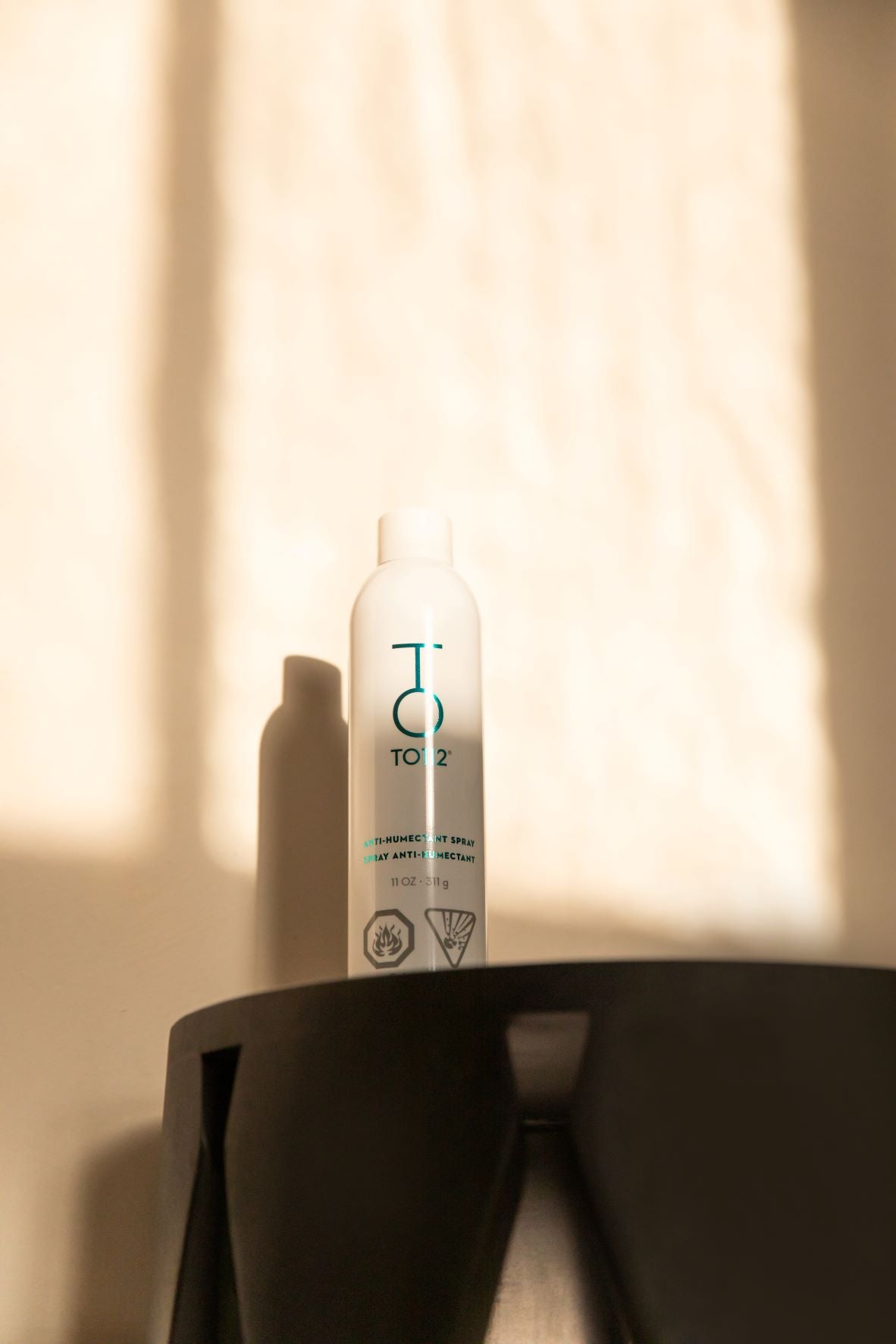
Anti-Humectant Spray
A final-step mist that seals the cuticle shut, blocking atmospheric moisture from re-entering after styling.
Learn more →Common questions, answered directly
Is frizzy hair automatically a sign of damaged hair?
No. Frizz is a normal humidity response that happens in healthy hair too. It only signals damage when paired with roughness, dullness, tangling, or breakage.
What's the real difference between healthy frizz and damaged frizz?
Healthy frizz appears mainly in humid weather, feels smooth, and calms once the cuticle re-closes. Damaged frizz is more constant, feels rough or straw-like, and comes with dullness and breakage.
Can frizzy hair become smooth and healthy again?
Yes, in most cases. Humidity-driven frizz resolves with a sealing routine. Damage-driven frizz can be managed and smoothed with protein treatments and trims, though full repair happens only as hair grows out.
Does curly or coily hair frizz because it's damaged?
Not inherently. Curl pattern raises cuticle scales at every bend, which causes more visible frizz structurally — though curly hair is also more mechanically fragile, so damage is common alongside it.
Does frizz mean I need a haircut?
Only if the frizz is concentrated at the ends along with visible splitting or breakage. Frizz spread evenly across the whole head is more often a humidity or product issue than a length issue.
Medical Disclaimer: This article is for informational and educational purposes only and does not constitute medical advice. Individual hair health varies. For persistent breakage, thinning, or scalp concerns, consult a licensed trichologist or dermatologist. TO112 products are cosmetic formulations and are not intended to diagnose, treat, cure, or prevent any medical condition.


